If you find this in your underwear, you had better know what it means…
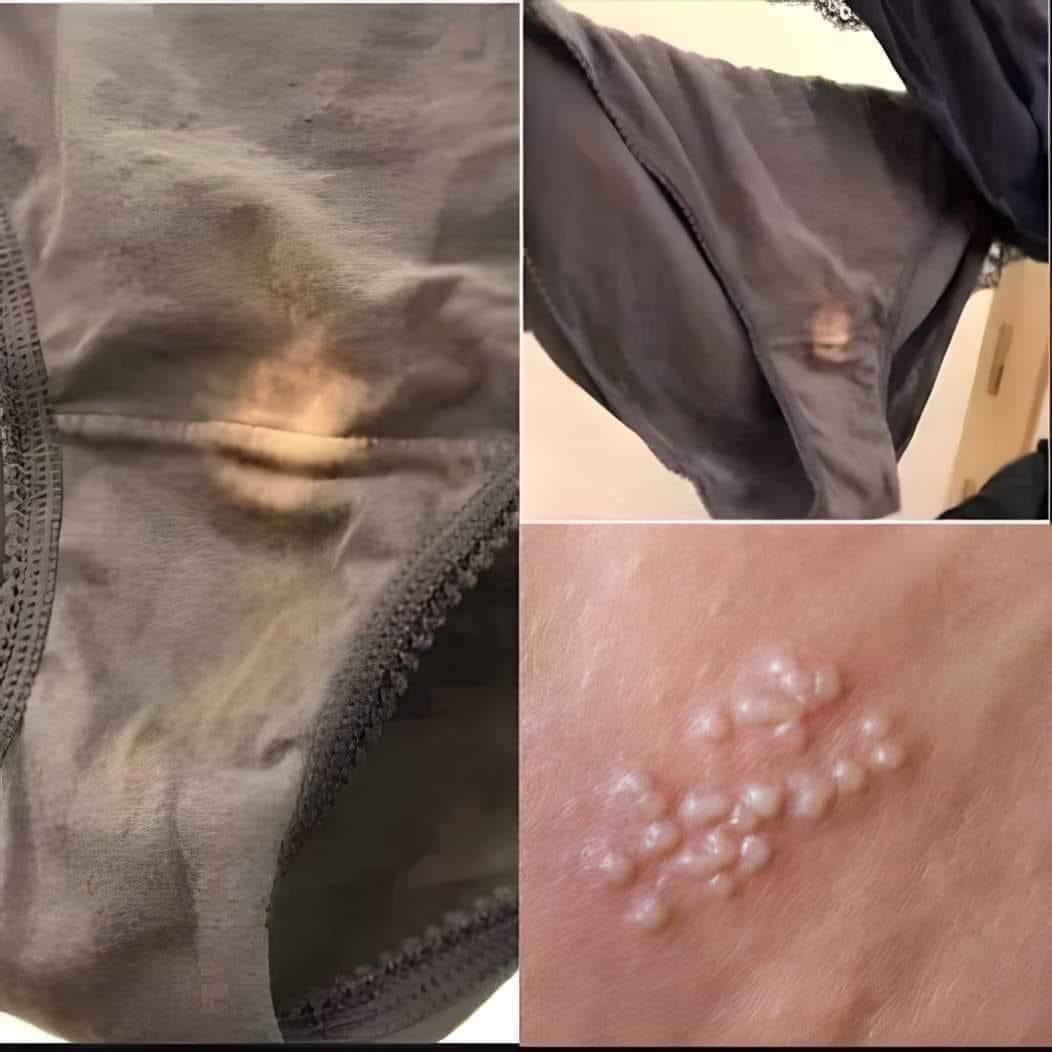
If you find this in your underwear, you had better know what it means…
Nowadays, we frequently search the internet for solutions as soon as our interest is piqued. Information is now accessible with only a click, eliminating the need for users to search library shelves for information. Recently, a seemingly insignificant but frequently asked issue went viral online and generated a lot of conversation: Why do panties occasionally seem to have bleach stains?
Many ladies discovered they weren’t the only ones who were experiencing this enigmatic occurrence, and what began as a single question on a well-known discussion thread swiftly developed into an intriguing subject. Netizens offered their theories as usual, but the specialists offered a convincing and unambiguous explanation. The offender? The vagi’s **natural pH levels.
Why Do Those Stains Exist?
Health experts say there’s no need to be concerned about those lighter areas or “bleach stains” on underpants. They actually indicate the health of the vagina! The pH of the vagi** naturally stays in the range of 3.8 to 4.5, which is slightly acidic. Although this acidity aids in defense against dangerous microorganisms and diseases, it can eventually discolor textiles.
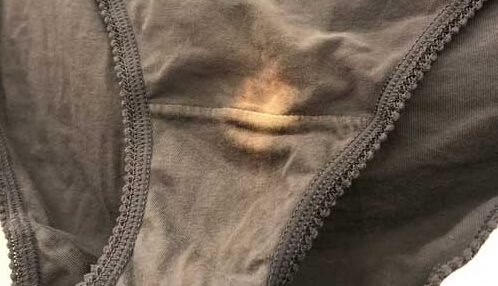
Because the vagi is acidic, it is quite usual to find lighter areas in a woman’s underpants or underwear, according to Dr. Vanessa MacKay, a spokesman for the Royal College of Obstetricians and Gynecologists. I guess it’s time to give up on the idea that it’s due to inadequate cleanliness. The ability to bleach the fabric is actually a sign of a healthy vagi**.
The vagi**’s normal pH level ranges from 3.8 to 5.0, according to the National Institutes of Health (NIH). In contrast, pure water has a pH of 7, which is neutral. This indicates that the vagi** is much more acidic, and this acidity can react with textiles, especially those that are dyed, to produce the discoloration or “bleach stains” that many women observe.
Cleansing Oneself and Discharging Healthily
The vagi** has a natural self-cleaning mechanism, which is another important fact that Dr. MacKay stressed. Its secretions, which are frequently white or clear in appearance, are quite normal and help to keep the vaginal ecology in balance.
Dr. MacKay cautioned that while it’s completely common and healthy for women to have clear or white discharge from their vagi, “disturbing the natural balance can lead to infections.” These secretions are essential for maintaining a hygienic and bacterium-free environment.
Dispelling Hygiene Myths
Finding discolouration on underwear has been mistakenly seen by many women as a sign of inadequate hygiene. There is no truth to this at all. On the contrary, a vagi** that is able to preserve its acidity and self-cleaning qualities is considered healthy.
It is easier to normalize the discussion and eliminate needless anxiety or embarrassment when one is aware of this common process. Knowing that these stains are a result of their body’s normal and necessary processes can reassure women.
Useful Advice on Care
Although these stains are quite common, the following advice may help you take better care of your body and your clothes:
- Put on cotton underwear. Cotton is a great option for preserving vaginal health because it is breathable and kind to the skin.
- Steer clear of harsh detergents: Wash your underwear with gentle washing detergents that don’t have any scents.
- Accept Natural Shifts: Recognize that discolouration is not cause for concern but rather an indication of healthy health.
You shouldn’t be alarmed if you’ve ever questioned why your underwear has those enigmatic bleach-like spots. It’s just your body doing what it’s meant to do, which is to keep a healthy balance. The stains that develop are really a harmless byproduct of the vagi**’s natural acidity, which is an essential component of its self-regulating mechanism.
Therefore, consider those luminous spots to be an indication that your body is operating as it should the next time you see them.
To help mainstream the discussion around women’s health and provide others with knowledge, please SHARE this post with your loved ones!
The information in this article is not intended or implied to be a substitute for professional medical advice, diagnosis or treatment. All content, including text, and images contained on americanwonderhub.com, or available through americanwonderhub.com is for general information purposes only. americanwonderhub.com does not take responsibility for any action taken as a result of reading this article. Before undertaking any course of treatment please consult with your healthcare provider.
Comments
Post a Comment